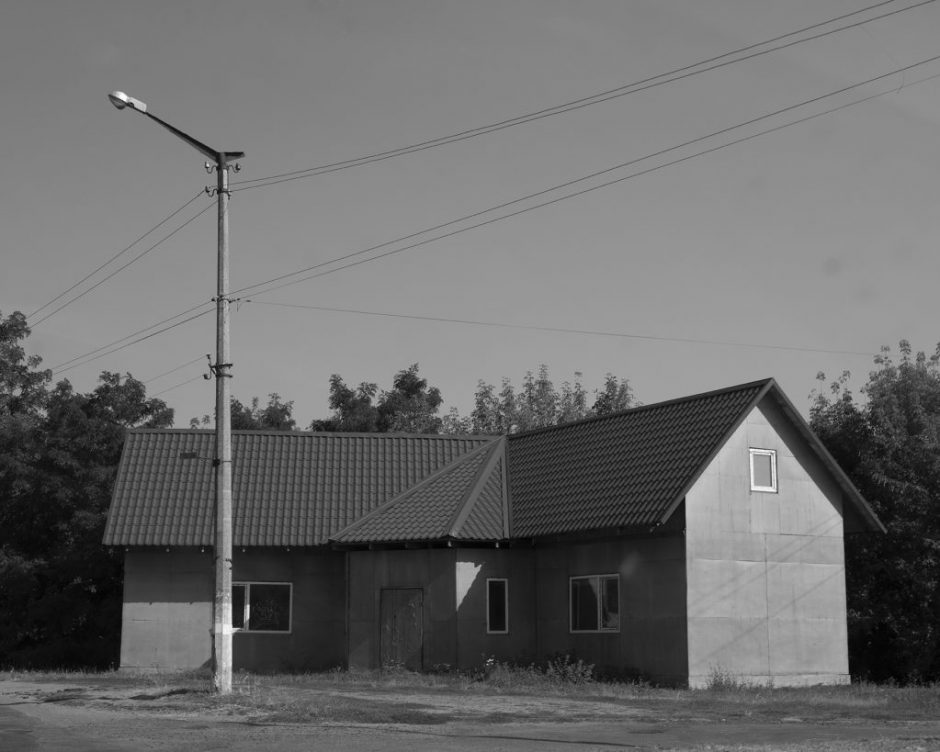
I have been thinking alot about Poetry and Photography recently. My first book’s title ” Lost in the Wilderness ” https://www.ft.com/content/39ae60bc-ca03-11e5-be0b-b7ece4e953a0 came about from an unfinished poem. The poem was a consequence of trying to come to terms with the internal battles that in the end I realise inform my practice. I am thinking if its possible to include this within the Action Research Plan.
Tod Papageorge’s articulates this relationship between photography and poetry is made in his introduction to Garry Winogrand’s book, Public Relations (1977):
A photograph is just a picture – or, as Winogrand would have it, “the illusion of a literal description of a piece of time and space.” It is as wanton a fiction as any description; but it is also, of course, a particularly convincing one because it so specifically locates and describes what it shows. As a poet knows that the words he chooses for his poem will, by their particular combination, resonate with a power that is the gift of language itself, so a photographer has at his disposal a system of visual indication that, even without his conscious deliberation, will describe the world with a unique, mimetic energy.
Auduen’s observation that “it is both the glory and the shame of poetry that its medium is not its private property, that a poet cannot invent his words,” could also be said of the photographer’s relation to the things of the physical world: that he cannot invent them. By being fictions and, at the same moment, returning their subjects to us with a compelling fidelity, both photographs and poems work with the same surprise. Atget’s beech trees will never shade us, any more than Frost’s birches will, but both have been given a “local habitation and a name,” both mediate between our experience and our sense of the-world-as-it-apparently-is, and both strike us an if they were simultaneously remembrances and revelations
Winogrand, G. & Papageorge, T. (1977) Public Relations. New York: Museum of Modern Art.
“Through my camera I see the world differently; it limits, crops, selects and guides seeing.”
Suominen, A. (2003) Writing with Photographs, Re-Constructing Self: An Arts-Based Autoethnographic Inquiry. MA thesis. The Ohio State University.
“If we could learn new ways of using our cameras we could start by telling our own stories in different ways. Initially we could use the camera for a dialogue with ourselves, as in photo therapy, to de-censorize ourselves, or as a type of visual diary-writing. Once we feel it is safe to proceed we can share our ‘new’ stories with allies, and we can begin to re-imag(in)e who we are, both visually and verbally. If we were encouraged to do this as children, who knows what we might begin to make of the world by the time we became adults? (Spence, 1988, p. 214).”
Spence, J. (1988) Putting Myself in the Picture: A Political, Personal and Photographic Autobiography. Real Comet Press / Camden Press, London/Seattle.
Autoethnography acknowledges that teaching and research are never neutral, and that positionality, social background, and racialised experience shape pedagogical encounters. Through written narrative, reflective journaling, and the creation of iPhone zoom images, I will generate a parallel body of material that both documents and interrogates my own relationship to visual literacy, photographic conventions, and inclusivity. These personal creative responses will be analysed in dialogue with student work, opening up resonances and tensions between individual and collective experience.
By combining action research and creative autoethnography, the project aims not only to measure the inclusivity of the intervention but also to expose the cultural and personal frames through which it is conceived and enacted. This hybrid methodology acknowledges that inclusive pedagogy requires both practical change in teaching practice and critical self-reflection on the part of the educator.

Memoire Temporelle, Photographs by Kalpesh Lathigra